











Skip links

HTG Mortgages

Self-Employed Mortgage Advice From Independent Experts

Last Updated: August 2026

Featured in The Telegraph • Daily Mail • The Times • Sky News

Being self-employed shouldn’t make it harder to get a mortgage. I’ll compare mortgages from over 120 lenders who understand self-employed, contractor and limited company income, explain everything in plain English and support you from your first enquiry until your mortgage completes.

Know exactly how much you can borrow before you approach lenders

Find the right self-employed mortgage with expert guidance on income evidence

Compare self-employed mortgages from over 120 lenders, including specialist options

WhatsApp Us
Self-Employed FAQs
Mortgage Calculator
Call 01425 203055

As featured in…

Harry Goodliffe, director and FCA-authorised mortgage advisor at HTG Mortgages, at his desk

Meet your Advisor

Harry Goodliffe

  • FCA Authorised
  • Director & Mortgage Advisor

“I‘m not about confusing jargon or passing you from person to person. From our first chat to the day you get the keys, you’ll deal directly with me. I‘ll keep you updated, answer any burning questions, and do everything I can to make the whole process as stress-free as possible.”

Let’s Talk About Your Mortgage

This field is for validation purposes and should be left unchanged.
First Name(Required)

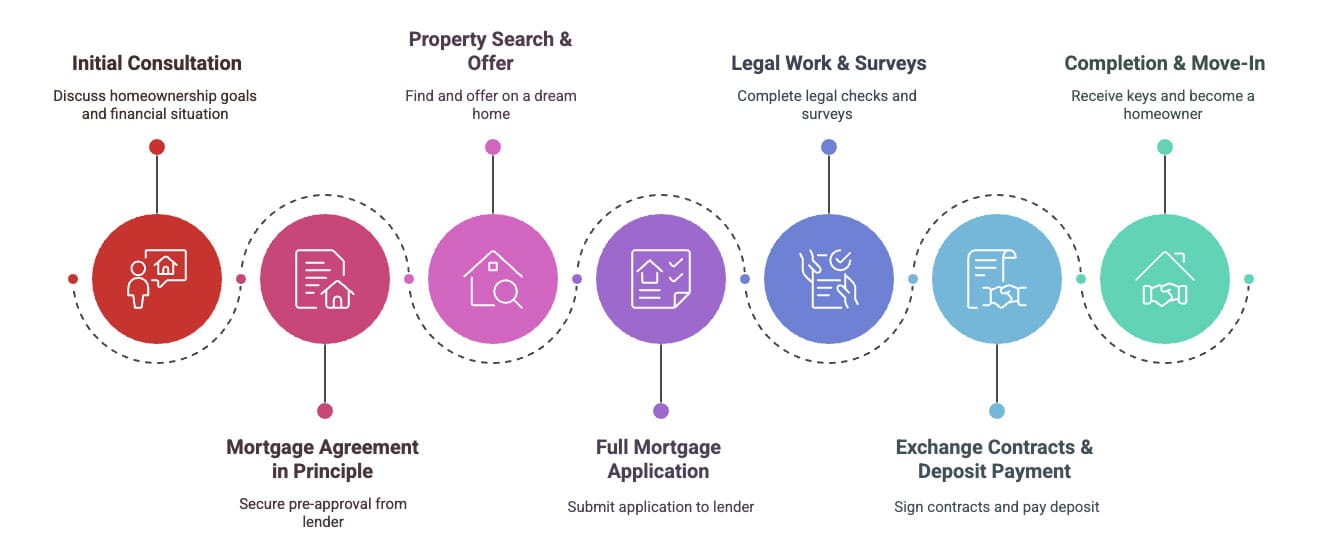
Your Self-Employed Mortgage, Step by Step

process-first-time-buyer-guide

Self-Employed Mortgage Guide

Answers to the questions we’re asked every day by self-employed applicants.

What is the self-employed mortgage process?

Getting a mortgage when you’re self-employed follows the same basic stages as any mortgage application: an Agreement in Principle, finding a property (or preparing to remortgage), a full application, underwriting and a formal mortgage offer. The main difference is the income evidence you provide, since self-employed applicants need business accounts and tax records rather than payslips.

As your mortgage broker, we’ll tell you exactly which documents each lender needs before you apply, and manage the process on your behalf from your first enquiry through to completion.

Key takeaway: The self-employed mortgage process follows the same stages as any mortgage, but the income evidence you provide is different, and having a broker who knows what each lender expects can help prevent delays.

How do lenders assess income for the self-employed?

Most lenders look at your last one to three years of accounts, tax returns (SA302s and tax year overviews), or, if you run a limited company, a combination of salary and dividends or retained profits. Some lenders average your last two years’ income, while others use your most recent year if your income is growing.

Because every lender calculates self-employed income differently, I compare mortgages from over 120 lenders to find one whose assessment method works in your favour.

Key takeaway: How your income is calculated varies significantly by lender, so matching your circumstances to the right lender can make a real difference to how much you can borrow.

Can I get a mortgage with only one year of accounts?

Some lenders will consider applicants with just one year of accounts, particularly if you have a strong trading history in the same industry beforehand, a healthy deposit, or a clear pattern of income. Other lenders require a minimum of two or three years of accounts.

We know which lenders are most flexible on trading history, so we can help you explore your options even if you’ve only recently gone self-employed.

Key takeaway: One year of accounts doesn’t automatically rule you out, it depends on the lender and your wider circumstances, which is where a whole-of-market broker can help.

Do I need a bigger deposit if I'm self-employed?

Not necessarily. Many lenders offer self-employed applicants the same deposit requirements as employed applicants, with mortgages available from around 5-10% deposit depending on the lender and product. A larger deposit can still help you access more competitive rates and a wider choice of mortgages.

We’ll explain how your deposit size affects the mortgage options available to you and whether a larger deposit would meaningfully improve your rate.

In summary: Being self-employed doesn’t automatically mean you need a larger deposit, though a bigger deposit can still open up better rates.

Speak to an expert

Whether you’re a sole trader, contractor or limited company director, HTG Mortgages is here to make getting a mortgage as simple and stress-free as possible. I’ll compare mortgages from over 120 lenders, guide you every step of the way and help you find the right mortgage for your circumstances.

Landlord as well? Here is how buy to let mortgages work when you are self employed.

A recent case: the company director who was told her house was out of reach, and how the same accounts gave three different income figures.

Another recent case: one year of self-employed income from an online platform, and how it went to a high street lender.


Get in touch

What documents do I need for a self-employed mortgage?

Typical documents include your last one to three years of SA302s and tax year overviews (or company accounts if you’re a limited company), business bank statements, evidence of ongoing contracts or income, and personal bank statements. Requirements vary between sole traders, partnerships, contractors and limited company directors.

During your free chat, we’ll confirm exactly what you’ll need for the lenders best suited to your circumstances, so you can gather everything before you apply.

Key takeaway: The right documents depend on how your business is structured, and knowing what’s needed in advance can help your application move faster.

Should I use a mortgage broker if I'm self-employed?

Self-employed mortgages are one of the areas where using a broker makes the biggest difference. Every lender treats self-employed income differently, and some high street lenders are far more cautious than specialist lenders who deal with self-employed applicants every day.

I compare mortgages from over 120 lenders, handle the paperwork, and present your income in the way each lender needs to see it, rather than leaving you to fit into one bank’s criteria.

In summary: A broker who understands self-employed income can help you access lenders and rates you might not find by approaching a bank directly.

What if my income varies year to year?

Fluctuating income is common for self-employed applicants, and most lenders are used to it. Some average your last two or three years of income, while others may accept your most recent year if it’s an improvement, or take a more cautious view if your income has dropped.

We’ll help you find lenders whose approach to income averaging works best for your situation, particularly if your most recent year is your strongest.

Key takeaway: Variable income doesn’t have to work against you, the right lender can make a meaningful difference to how your income is assessed.

Will a lower credit score stop me getting a mortgage?

Every lender has different criteria, so there isn’t a single credit score that guarantees approval. Having a strong credit history can improve your chances and may give you access to better rates, but there are specialist lenders who may still consider self-employed applicants with a less-than-perfect credit history.

Before applying, it’s worth checking your credit report and keeping all payments up to date. If there are any issues, we’ll discuss the options available before submitting your application.

Key takeaway: A strong credit history helps, but it isn’t the only factor lenders consider, and there are options for self-employed applicants with credit issues.

How long does a self-employed mortgage application take?

Once you’ve found a property or decided to remortgage, most self-employed applications take a similar amount of time to standard mortgages, typically two to six weeks to reach a formal offer, though this can take longer if a lender needs to carry out extra underwriting on your accounts.

We manage the process from start to finish, chase documentation on your behalf, and keep you updated so nothing holds up your application unnecessarily.

In summary: Self-employed applications can take slightly longer due to extra income checks, but having your documents ready in advance helps keep things on track.

Why choose HTG Mortgages if you're self-employed?

Being self-employed can feel like it complicates getting a mortgage, but you don’t have to work it out alone. From your first enquiry through to completion, you’ll deal directly with Harry, who understands how self-employed income is assessed and will compare mortgages from over 120 lenders on your behalf.

Our aim is to find a lender whose criteria fit your circumstances, rather than trying to make your circumstances fit one bank’s criteria.

Key takeaway: You’ll get independent advice from someone who understands self-employed income, access to over 120 lenders, and direct support from Harry from start to finish.


Self employed mortgage guides

every page and article in one place

Everything I have written for sole traders, company directors and contractors sits below, grouped by the question you are likely to have. Each card opens the full page.

Sole traders, directors and contractors

Sole Trader Mortgages

Working from your SA302s and tax year overviews, including where you only have one year of figures.

Limited Company Director Mortgages

Salary, dividends and, with some lenders, the profit left in the company. I explain how each is read.

Contractor Mortgages

Lenders that assess a contractor on the day rate rather than on accounts, and what they ask to see.

Day Rate vs PAYE

How annualising a day rate can change the maximum borrowing for a contractor, with worked figures.

Contractors and CIS

Umbrella Company Mortgages

How lenders read umbrella payslips, the PAYE and day rate routes, and what the April 2026 change means for you.

CIS Subcontractor Mortgages

Lenders can work from your CIS payslips or your SA302s. I have placed cases both ways, and the route matters.

Proving your income and contract types

Proving Self Employed Income

The documents a lender wants from a self employed applicant and the order I ask for them in.

What Does an SA302 Look Like?

What is on the HMRC tax calculation, how it differs from the tax year overview and how to get one.

Fixed Term Contract Mortgages

Time left on the contract and a history of renewals are what lenders look at. I set out what counts.

Zero Hour Contract Mortgages

Variable income is not no income. How lenders read a zero hours track record.

Accounts, dividends and retained profits

Salary and Dividends Explained

How lenders average a director’s salary and dividends over two years, and what happens when the latest year is lower.

One Year of Accounts

Some lenders will consider a single year of accounts. What they ask for and what helps your case.

Mortgages Using Retained Profits

If you leave profit in the company, a smaller group of lenders will assess salary plus net profit instead of dividends.

Real cases and specialist situations

Case Study: Company Director

Told the house was out of reach on salary plus dividends. How the same accounts read differently.

Case Study: One Year Self Employed

A first time buyer paid by an online platform, with one full year of self employed figures.

Self Employed Buy to Let

Why buy to let lending leans on the rent rather than your accounts, and what income lenders still want to see.

Mortgages for Accountants

Enhanced income multiples some lenders offer qualified accountants, and how LLP partner income is assessed.

Tax questions go to your accountant, and every application is assessed on its own facts. Some buy to let mortgages are not regulated by the FCA.


Book a Call

Fill in the form, and I’ll get back to you personally (usually the same working day). No call centre, no obligation, and no pressure. Just clear guidance from Harry at HTG Mortgages.

This field is for validation purposes and should be left unchanged.
Name(Required)

Looking for something else?

Mortgage Calculator

Estimate how much you could borrow.

Learn More

Buy-to-Let Mortgages

Thinking about becoming a landlord?

Learn More

Remortgages

See if you could save on your mortgage.

Learn More

Mortgage FAQs

Answers to common mortgage questions.

Learn More

Our Commitment to You

At HTG Mortgages, we are committed to helping you secure the right mortgage for your business and your future. We pride ourselves on our transparent, customer-focused approach and our dedication to providing the highest level of service. Your satisfaction and peace of mind are our top priorities. That’s why so many self-employed clients turn to us for guidance on their mortgage.

Book Your Free Chat

Ready to take the next step and work with lenders who understand self-employed income? Book a free chat with Harry today. I’ll guide you through the mortgage process, weigh up your options and make sure you understand exactly what you’re signing up for. HTG Mortgages will be with you every step of the way.

Why use HTG’s mortgage services?

Monday to Friday 8am to 5pm, Saturday 8am to 1pm

We are an independently owned, whole-of-market mortgage broker offering first-charge mortgages

You deal with Harry directly, from the first conversation to completion

Start button representing the first step of your mortgage journey

Let’s get your mortgage sorted

Book a call

Frequently Asked Questions

Have another question?

Some lenders may require more than one year of accounts, but we can help you find those willing to consider shorter trading histories when arranging mortgages for self-employed people.From my own cases: I have placed a mortgage for a client with just one year of accounts, and with a high street lender rather than a specialist. It is not the norm, and it depends on the strength of the rest of the application, but it does happen.

Most lenders are used to fluctuating self-employed income. Some will average your last two or three years, while others may use your most recent year if it’s stronger, so I’ll help you find a lender whose approach suits your situation. If part of your household income is benefits rather than self-employed earnings, see mortgages on benefits for how lenders treat that alongside self-employed income.

Not necessarily. Self-employed applicants are usually offered the same deposit requirements as employed applicants, typically from around 5-10%, though a larger deposit can still help you access better rates.

You’ll typically need your last one to three years of SA302s and tax year overviews or company accounts, plus business and personal bank statements. We’ll confirm exactly what’s needed for the lenders best suited to you. For a closer look at the SA302 specifically, see what does an SA302 look like.

Yes, lenders assess income differently depending on your business structure. Sole traders are usually assessed on net profit, while limited company directors may be assessed on salary and dividends or retained profits, so we’ll match you to lenders who suit your setup.

Some lenders can assess contractors based on their day rate rather than several years of accounts, which can be helpful if you’ve recently moved into contracting. We can help you find lenders who offer this approach.

Not necessarily. A strong credit history can improve your options, but there are specialist lenders who may still consider self-employed applicants with a less-than-perfect credit history.

Most self-employed mortgage applications take a similar amount of time to standard applications, typically two to six weeks to a formal offer, though this can vary if a lender needs extra time to assess your accounts.

It can be more challenging with a very short trading history, but some lenders will still consider you, especially if you were previously employed in the same industry. We’ll help you find the options available to you.

I compare mortgages from over 120 lenders, know which ones are most flexible with self-employed income, and handle the paperwork and lender communication on your behalf, so you can focus on running your business.

Get in touch

Book a call
This field is for validation purposes and should be left unchanged.
Name(Required)

Operating across the UK

Call Now WhatsApp